Categories
One main category that describes the clinic, plus secondary ones for the treatments you offer. They decide which searches you can appear for.
Free, no obligation
A Google Business Profile is the box that appears on the map and beside the results when someone searches for a physio near them. For many clinics it brings in more first calls than the website does, and it costs nothing to set up.
Patients who search for a physio near me are usually ready to book. They look at a few results, check the distance, the reviews and the opening hours and ring or tap the best one. A complete, accurate profile puts you in that short list. An empty or wrong one sends the patient elsewhere.
The profile and the website work together. The profile gets you onto the map and into the local results, and the website gives the patient the detail they need to decide, from treatments and fees to your team. A link from one to the other, and the same name, address and phone number on both, tells Google they belong to the same clinic.
I set up and tidy Google Business Profiles for physiotherapy clinics across Ireland. It starts with a free audit of what Google currently shows for your clinic, which is often out of date or missing categories entirely. The physiotherapists hub shows where the profile sits alongside the website and booking.
The profile has a handful of parts that do most of the work, and each one can be completed in a short sitting.
One main category that describes the clinic, plus secondary ones for the treatments you offer. They decide which searches you can appear for.
A list of the treatments you provide in plain words, so a patient can see at a glance that you treat what they have.
Your regular hours plus any changes for bank holidays and holidays, kept current so a patient never turns up to a locked door.
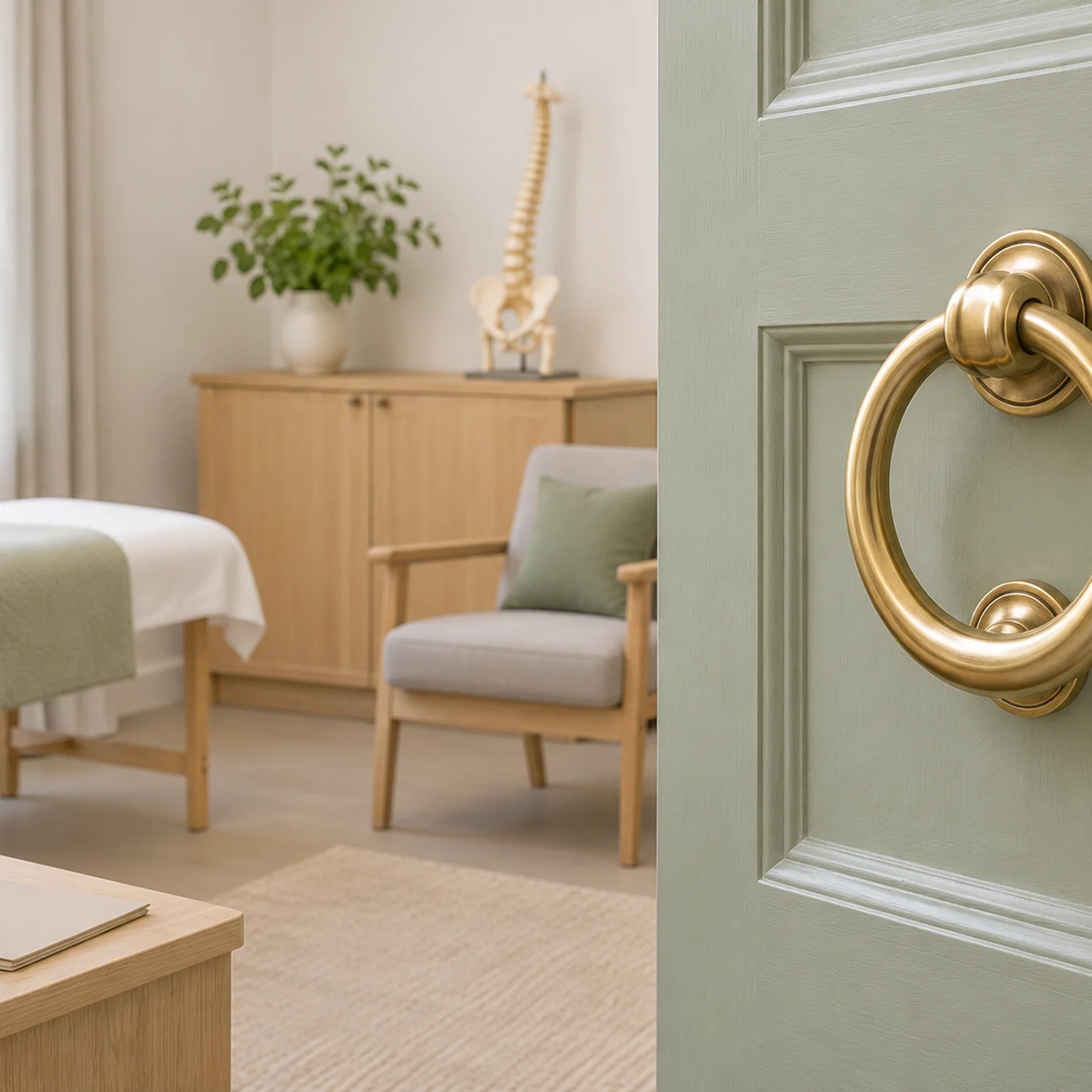
Your entrance, your waiting area and your treatment rooms, so a new patient can find you and knows what to expect.
A direct link to your booking page, so a patient who finds you on the map can book in a couple of taps.
A short, factual description of the clinic and its team, written in plain words and without claims you cannot support.
Local results are decided by three things working together: how close the clinic is, how relevant the profile is to the search and how well known the clinic appears.
Distance matters, and you cannot change where your clinic is. What you can control is relevance and prominence. A profile with the right categories, a full set of services and an accurate description tells Google exactly which searches you suit.
Prominence comes from how well known the clinic seems online. Genuine reviews, a website that matches the profile and consistent details across the web all help. A clinic with a steady stream of recent, honest reviews usually has the edge over a similar one with a handful from years ago.
The search itself also matters. Someone looking for a sports physio near them sees different results from someone searching for a physio in the town centre, so a profile that names the specialisms and the areas you serve covers more of those searches. A clinic that treats runners, new mothers and older adults can reflect each of those in its services list, so the profile speaks to every one of them and not only to the most obvious. Review the list each year, adding anything new and removing anything you no longer offer.
Reviews are the part of the profile patients read most carefully, and they are the part you cannot fake or buy. They come from asking at the right moment.
The best time to ask is when a patient has just finished a course of treatment and feels better. A card at reception, a line in the follow-up message or a short link to the review page makes it easy. Most patients are glad to help if the ask is polite and quick.
Replying matters too. A short, warm reply to a good review shows the next patient how you treat people, and a calm, factual reply to a poor one often does more good than the review does harm. A reply should never repeat a patient's health details, because the review is public.
Google has rules against offering rewards for reviews and against filtering which patients you ask, so the sensible approach is to ask everyone and let the results fall where they may.
A handful of small mistakes account for most of the profiles that underperform. Each is quick to fix.
| The mistake | Why it costs patients | What to do instead |
|---|---|---|
| Wrong or missing hours | A patient arrives to a closed door, or does not ring because it looks shut | Keep regular and holiday hours current |
| One category only | You miss the searches for your other treatments | Add secondary categories that match what you offer |
| No booking link | The patient has to find the website and hunt for a button | Link straight to the booking page |
| Old or no photographs | A new patient cannot tell what the clinic is like | Add current photographs of the entrance and rooms |
| Different details from the website | Google is unsure the two belong to the same clinic | Use the same name, address and phone number everywhere |

Patients who have never visited use photographs to decide whether the clinic feels right, and to find the door when they arrive.
A clear photograph of the entrance helps patients find you, which matters more than clinics expect, particularly in a street where several doors look alike. A good exterior shot at the right time of day, with the door visible and nothing blocking it, saves late arrivals and confused calls.
Inside, a bright treatment room and a calm waiting area show what the visit will be like. Photographs should be recent and honest, since patients notice when a profile shows a room that no longer exists. Replacing them every year or so keeps the profile looking cared for.
Photographs of the team are worth adding if the practitioners are comfortable with them. Keep patient faces out of every image, because their consent is needed and the privacy risk is not worth it.
The set-up is short, and it can run alongside the website build or stand on its own.

Yes. A profile that links to a clear booking page turns a map search into an appointment in a couple of taps.
The profile has a place for a booking link, and using it well is one of the cheapest ways to turn visibility into bookings. A patient who finds you on the map sees the link, taps it and lands on a page built to take the booking, without hunting through the site.
It also lets you measure what is working. The profile reports how many people called, asked for directions or clicked through, so you can see whether changes to the profile bring more first visits.
Keep the details matching. If the profile says one phone number and the website another, patients and Google both lose confidence. A little care at the start saves a lot of confusion later, and a quick check each time something changes keeps the two in step. A new practitioner, a change of hours or a moved phone line should be updated on the profile and the website on the same day, so a patient never meets two different answers.
Yes. Setting up and managing a profile costs nothing. The time goes into completing it properly and keeping it current, which is where a clinic gains an advantage over one that has left it empty.
The main category should describe the clinic as it is, which for most is physiotherapist. Secondary categories can cover specific treatments or specialisms you offer. Choose only those that are true, because Google can remove profiles that misrepresent the business.
Ask patients at the end of a course of treatment, with a link that opens the review box directly. Ask everyone, reply to each review and never offer a reward, since Google has rules against that.
Yes, and it is worth doing calmly. Thank the patient, say you are sorry they were unhappy and invite them to contact you privately. Never repeat their health details in a public reply.
Yes. A direct booking link turns a map search into an appointment, and the profile reports how many people use it. The <a href="/physiotherapists/booking-system">physio booking system</a> page explains how to set up the page it points to.
Your entrance, waiting area and treatment rooms, taken recently and honestly. Photographs of the team are fine if everyone agrees. Keep patient faces out of every image.
Distance, relevance and prominence decide the results. You cannot change where you are, but a complete profile, the right categories, a matching website and recent reviews improve the other two.
Each location gets its own profile, with its own address, hours and photographs. The website then has a page for each location so the profile and the page match.
Yes. The name, address and phone number should be identical on both, written the same way. Mismatches make Google less sure that they belong to the same clinic.
Yes, there is a section for services where you can list each treatment in plain words. It helps patients see that you treat what they have and helps Google match you to those searches.
Check it every few months and whenever something changes, such as hours, a practitioner or a service. Add fresh photographs once or twice a year so it looks cared for.
It can, but the results are weaker. A website gives patients the detail they need to decide, and a link from the profile sends them there. The <a href="/physiotherapists/website">physiotherapy website design</a> page covers what it needs.
Very much. A patient who arrives to a closed door or who does not ring because the clinic looks shut is a lost booking. Keep regular and holiday hours current.
Each page goes deeper on one part of filling tables and taking orders and bookings on your own site.
Checked on 24 November 2026. Rules and guidance change, so the official pages named below are the place to confirm the current position.
 Start hereGoogle Business Profile for Irish Businesses: The Complete Setup GuideRead the guide →
 Local SEO for Irish Businesses: How to Rank on Google in Your AreaA practical guide to local SEO for Irish businesses, how Google local search works, what moves the needle, and how long results realistically take.
 Online Booking Systems for Irish Businesses: How to Choose OneThe three ways an Irish business can take bookings online, what each one really costs, and how to work out which suits you. Plain English, no jargon.
 How to Update Your Website Yourself: A Plain Guide (Ireland)How to work out what your website is built on, get into it, and change prices, hours and photos yourself. Including if you have lost access.
Send me your current website address and I will tell you plainly what is working, what is holding it back and whether a rebuild is worth it. Free, with a fixed price agreed before any work starts.